Playing with Kids All Day (And Other Lies About Kindergarten Teachers)
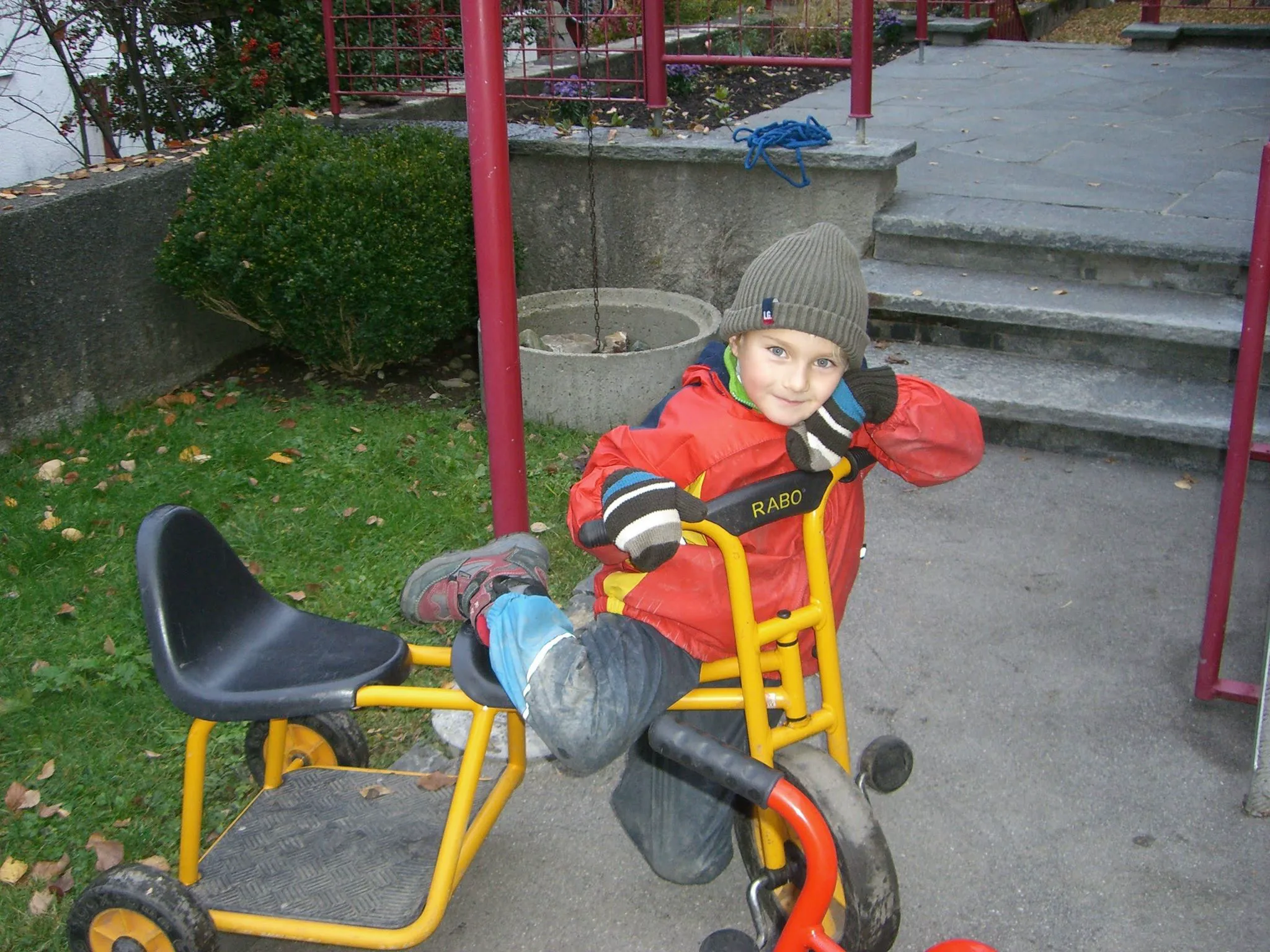
Ask people what kindergarten teachers actually do all day and the answer is usually some version of "play with kids." Not "real" work in the way an office job or trades are real work. Glorified babysitting with arts and crafts. Pleasant if you like kids, easy if you don't, paid accordingly either way. But spend a few months actually inside one and that picture falls apart pretty fast.
I did my Zivildienst in a kindergarten. I came in expecting a fairly low-stakes year. I left with very different views about what the work involves, what it pays, and why both of those things look the way they do. The post below is partly the institutional reality, partly a lesson I had to be in the room to learn.
The work itself
Pay first, since that's where the disconnect is most visible. In Austria, kindergarten teachers often earn less per hour than cleaning staff. The average wage sits around €14.97 per hour, barely above the poverty threshold. This isn't a recent dip. Back in 2015, kindergarten teachers in Styria already reported severe understaffing and low pay as the main reason colleagues were leaving the field.
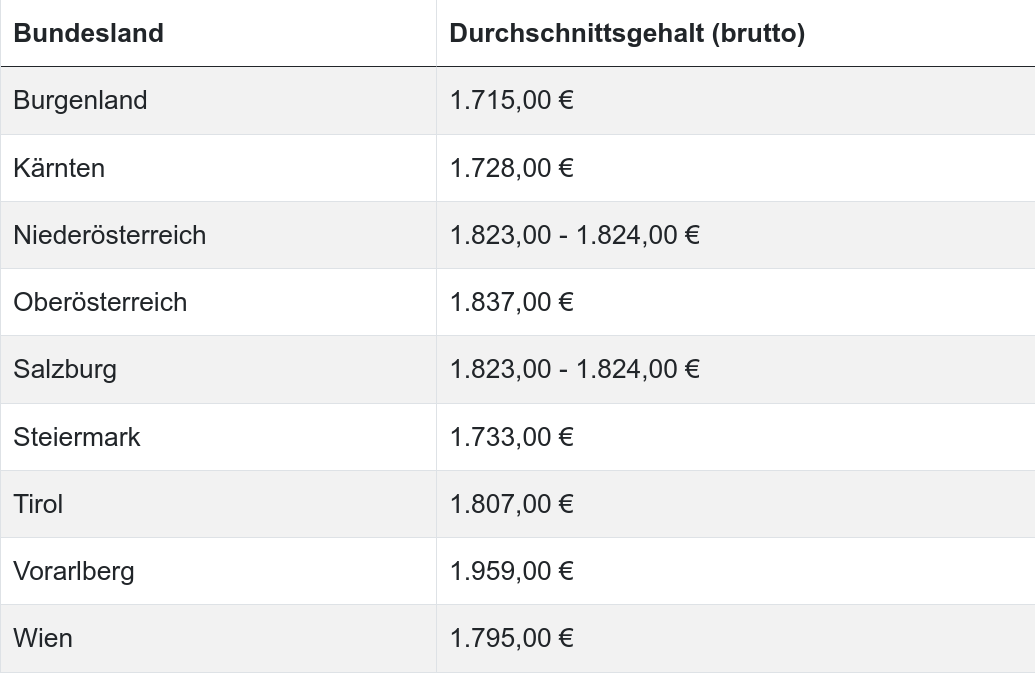
And those are just the paid hours. A study by the Austrian Union (ÖGB) found that documentation, planning and prep regularly bleed into evenings and weekends because there's no realistic way to fit them into the actual workday. Vienna alone had over 700 unfilled positions at one recent count, which means everyone still in the system is absorbing the gap. Burnout, sick days where staff show up anyway because calling in wrecks the rest of the team, the standard pattern of every understaffed care profession.
Then the part of the job that doesn't show up on a payslip. Many kids arrive carrying things going on at home: divorce, neglect, inconsistent parenting, emotional needs nobody at home is equipped to handle. Kindergarten teachers are usually the first adults to notice when something is off, and they're expected to communicate that delicately to parents who don't always want to hear it. Then there are the helicopter parents on top. No, Karen, your child repeatedly pushing others isn't "expressing individuality," it's creating chaos. Dealing diplomatically with people like that is itself emotional labor, and nobody is paying anyone for it.
I still remember my own kindergarten days. Back then, mornings were the norm and afternoon care was a rare luxury. At my kindergarten there was exactly one afternoon group. Fast forward to today and children are entitled to up to 50 hours of care per week, and a lot of families need that whole window. What used to be mostly mornings has turned into full-day care, while salaries have barely moved in twenty years. The system can't keep up; many parents still scramble for proper afternoon spots.
During my Zivildienst I noticed something that has stuck with me: some kids spent so many hours there that I was seeing them more often than one of their parents did. Just let that sink in. A kindergarten teacher can become the adult a child spends the most waking hours with. In those cases the kindergarten isn't just a family supplement, it becomes a family substitute. That requires time, sensitivity and a huge amount of professional skill from the staff, far beyond the idea of "just playing."
If something at this scope happened in any other industry, people would be on the streets within a week. Imagine factory workers being told: "Congrats, double shifts now. Pay stays where it was." You'd have the Metaller out faster than you can say strike.
Why does nobody take this seriously?
One reason is painfully obvious: gender. Childcare is overwhelmingly female, with women making up around 92% of the workforce. This isn't a statistical fluke. Care-based fields dominated by women are historically and consistently undervalued, underpaid and ignored by policymakers. Kindergarten teaching sits right in the middle of that pattern. If 90% of kindergarten teachers were men, we'd probably be calling them "early childhood engineers" by now and paying them like junior consultants at McKinsey.
Austrian politics still treats kindergarten teaching as closer to babysitting than to a teaching profession, despite the formal qualifications saying otherwise. Kids don't vote, the workforce isn't a swing constituency, and "we need to seriously raise kindergarten budgets" wins exactly zero elections. So the system stays neglected and the people inside it absorb the cost.
These educators aren't just "watching the kids play." They are professional caregivers, trained educators, psychologists who identify and support emotional struggles, skilled mediators handling daily conflicts, nurses attending to scrapes and bruises and crisis managers when something actually goes wrong. The skill set is broad and the emotional resilience required is real. The expertise stays underestimated, underfunded and underappreciated because the underlying assumption is that "women's work" doesn't count as proper work.
It's not that nobody knows the conditions are bad. The numbers are public, the studies exist, the unions publish reports every other year. The reason the situation persists is that the political incentive to fix it is almost zero.
When the care and education of children is treated as secondary work, the message is clear. Children, and the people raising them, aren't the priority.
"But at least they get to play!"
Yeah, about that.
Play isn't trivial. It's the building block of social, emotional and cognitive development, the substrate on which empathy, cooperation, language and basic problem-solving get built. Guiding that process effectively requires specialized training, psychological literacy, patience, and continuous attention. None of which is free, and none of which comes from winging it with kids.
In Austria, kindergarten teachers train through specialized institutions called Bildungsanstalten für Elementarpädagogik (BAfEP). Five years of formal education, ending in a full Matura. The same university-qualifying credential as any other Austrian secondary school. Combined theoretical coursework and intensive practical placements. Helping a child process the emotional fallout of a parental divorce, recognizing the signs of neglect or abuse early enough to act on them, spotting developmental delays before they harden, mediating the same fight between the same two kids fourteen days in a row without losing patience. That's the work.
Calling it "playing" isn't a description. It's a way of justifying not paying for it.
What would actually help
Some Austrian regions have started inching forward. Styria and Upper Austria have raised wages slightly and shrunk group sizes, which is something. It isn't, by any sensible reading, close to enough.
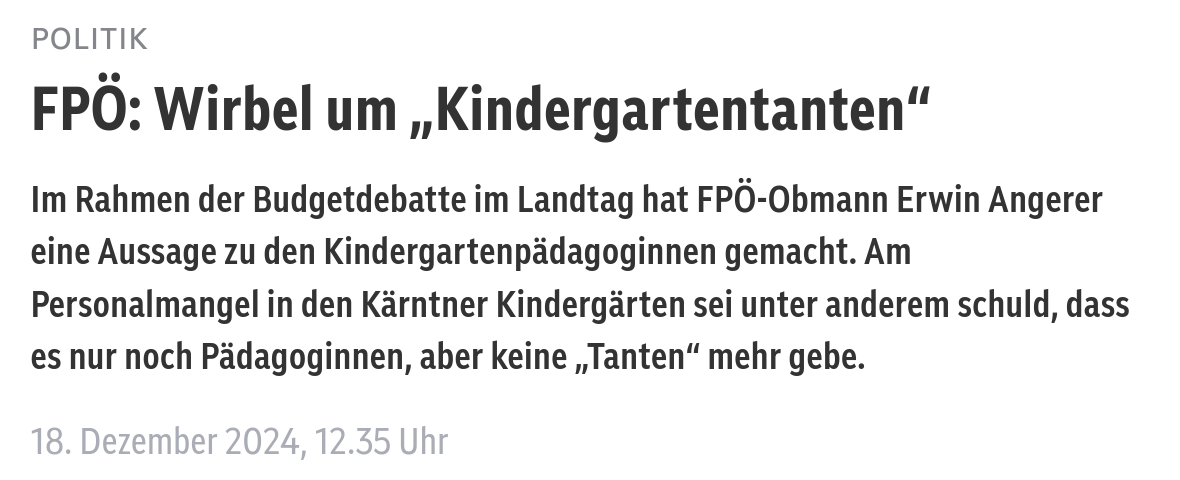
Disrespectful non-solutions won't change a thing, source
Politicians like to call kindergarten teachers unsung heroes around election season. The applause is free; it always is. What would actually move things is unglamorous and expensive: meaningfully higher wages, smaller groups, paid prep and recovery time, and treating the profession as the educational field it formally already is. None of those are mysteries. They just don't get done.
Kindergarten teachers aren't babysitters. The role rolls together what would, in any other context, be split across an educator, a therapist, a nurse, a negotiator and a role model. Every day they handle the chaos, solve the emotional puzzles, mediate the conflicts and shape the next generation, and most of that goes unrecognized and unpaid. They deserve more than poverty-level wages, chronic understaffing and the steady drip of public condescension.
The math here isn't complicated. We say children are the future and we pay the people raising them less than the people who clean the building. That contradiction is the whole story.
If we keep going down this path of indifference and neglect, we shouldn't be surprised when nobody is left to care for our children. Maybe only then, faced with an actual childcare crisis, will the conversation finally shift away from "just playing" and toward what the work is: essential, skilled and foundational education shaping our collective future. (Until then, keep telling yourself Paw Patrol is raising your kid.)
Comments